September 29, 2026

Intelligent iOS apps with AI-powered assistants, Siri integration, and automation features

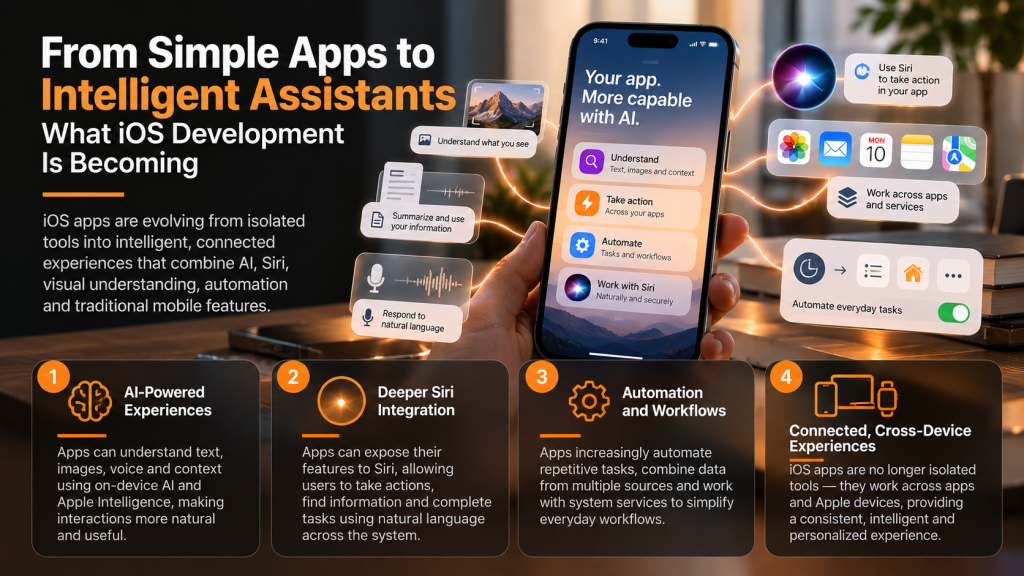
From Simple Apps to Intelligent Assistants: What iOS Development is Becoming

Intelligent iOS apps are evolving beyond isolated tools into connected assistants that combine artificial intelligence, Siri, App Intents, and automation. Apple Intelligence, Siri AI, App Intents, visual intelligence and on-device foundation models increasingly allow apps to understand language and images, expose actions to the operating system and participate in workflows that cross traditional app boundaries.

From Simple Apps to Intelligent Assistants: What iOS Development is Becoming Read More »
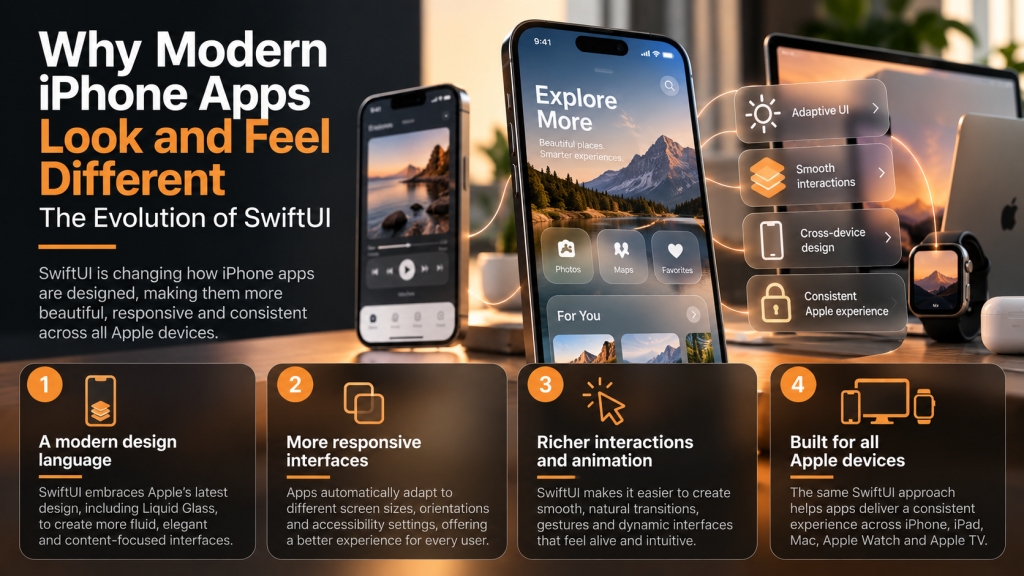
Modern iPhone app interfaces illustrating SwiftUI evolution, adaptive design, and Liquid Glass

SwiftUI Evolution: Why Modern iPhone Apps Look and Feel Different

SwiftUI evolution is changing how modern iPhone apps look and feel, with adaptive layouts, richer interactions, and interface designs that respond more naturally to different devices and user needs. Modern iPhone apps increasingly feel more fluid, adaptive and consistent across Apple devices. SwiftUI is a major reason: Apple has evolved it from a declarative UI framework into a broader system for responsive layouts, navigation, animation, platform adaptation and the new Liquid Glass design language.

SwiftUI Evolution: Why Modern iPhone Apps Look and Feel Different Read More »

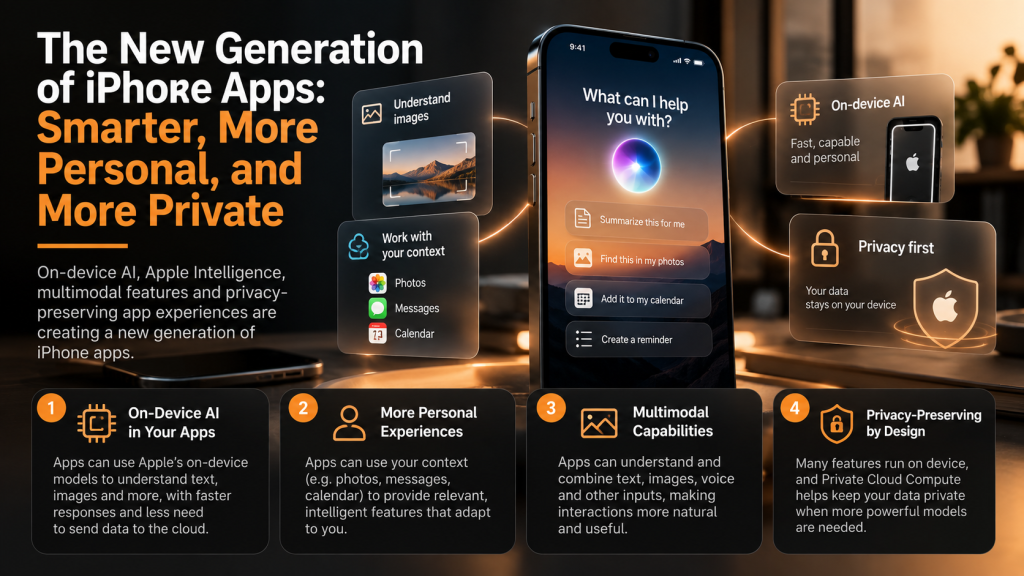
AI-powered iPhone apps illustrating Apple Intelligence, personalized assistants, and privacy-focused features

AI-Powered iPhone Apps: Smarter, More Personal, More Private

AI-powered iPhone apps are becoming smarter, more personal, and more privacy-focused through advances in Apple Intelligence, on-device AI, multimodal models, and intelligent interactions. A new generation of iPhone apps can understand text and images, respond to personal context, perform intelligent tasks on device and connect naturally with Siri and Apple Intelligence. Apple’s expanding AI architecture gives developers new ways to create personalized experiences while reducing how much sensitive information needs to leave the device.

AI-Powered iPhone Apps: Smarter, More Personal, More Private Read More »

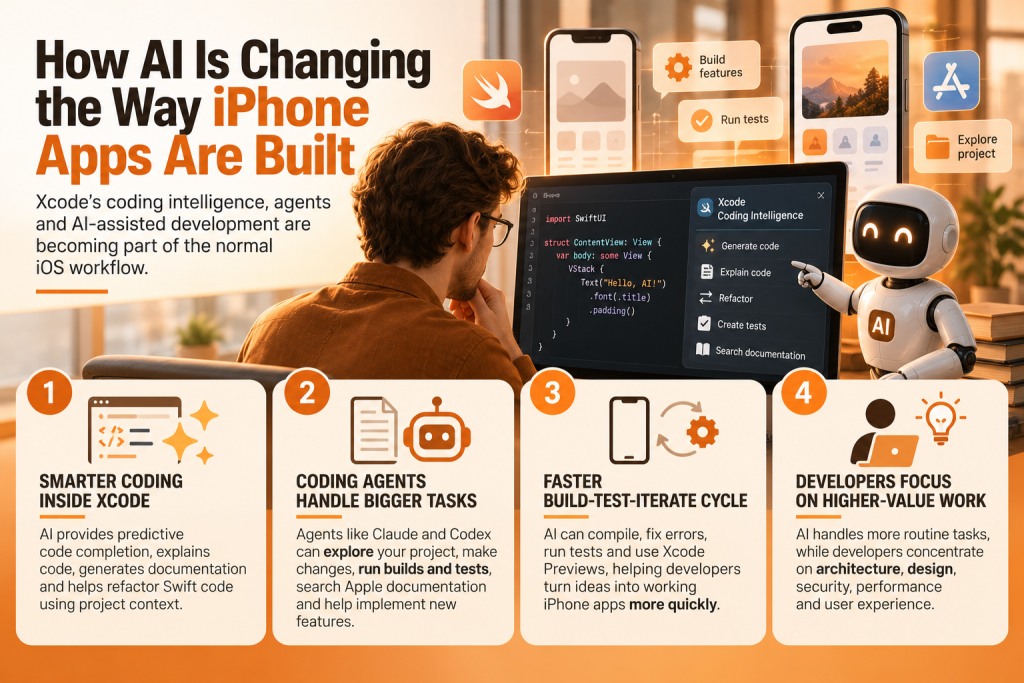
AI iPhone App Development: How AI Is Changing App Creation

AI iPhone App Development: How AI Is Changing the Way Apps Are Built

AI iPhone app development is changing how developers build, test, and maintain applications. Advances in Xcode, AI coding assistants, and automated workflows are helping developers work more efficiently while keeping architecture, code quality, and user experience central to the development process.

AI iPhone App Development: How AI Is Changing the Way Apps Are Built Read More »

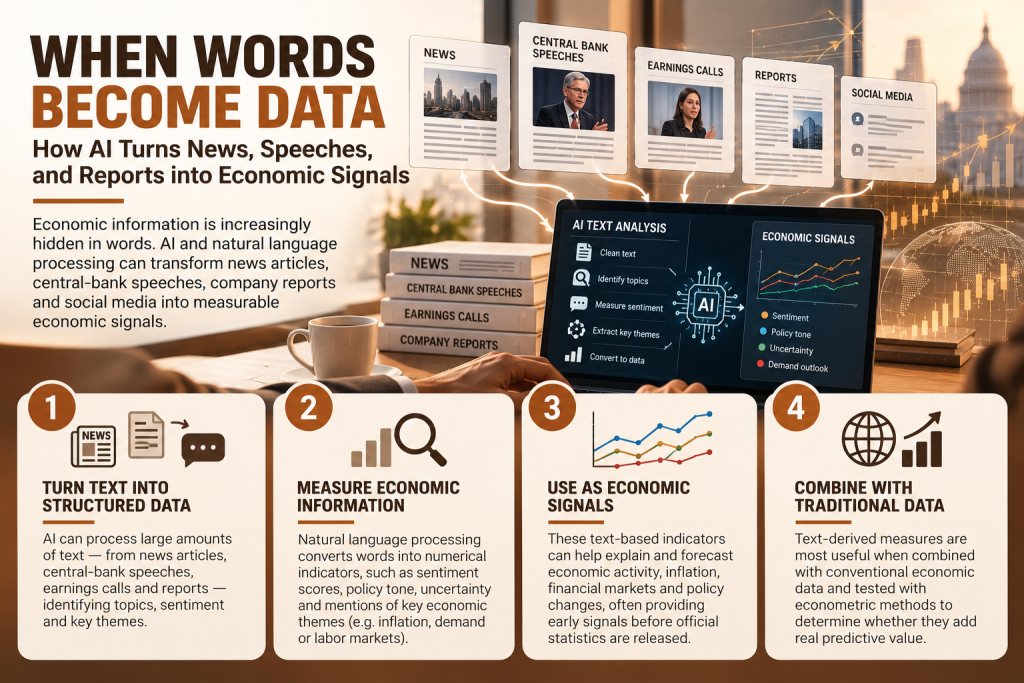
AI text analysis economic signals extracted from news, speeches and financial reports for economic forecasting

AI Text Analysis Economic Signals: How News and Speeches Inform Forecasts

AI text analysis economic signals are increasingly used to extract meaningful information from news articles, central-bank speeches, earnings calls, and business reports. By combining natural language processing with machine learning, economists and analysts can transform unstructured text into measurable indicators that help explain economic developments and support forecasting.

AI Text Analysis Economic Signals: How News and Speeches Inform Forecasts Read More »

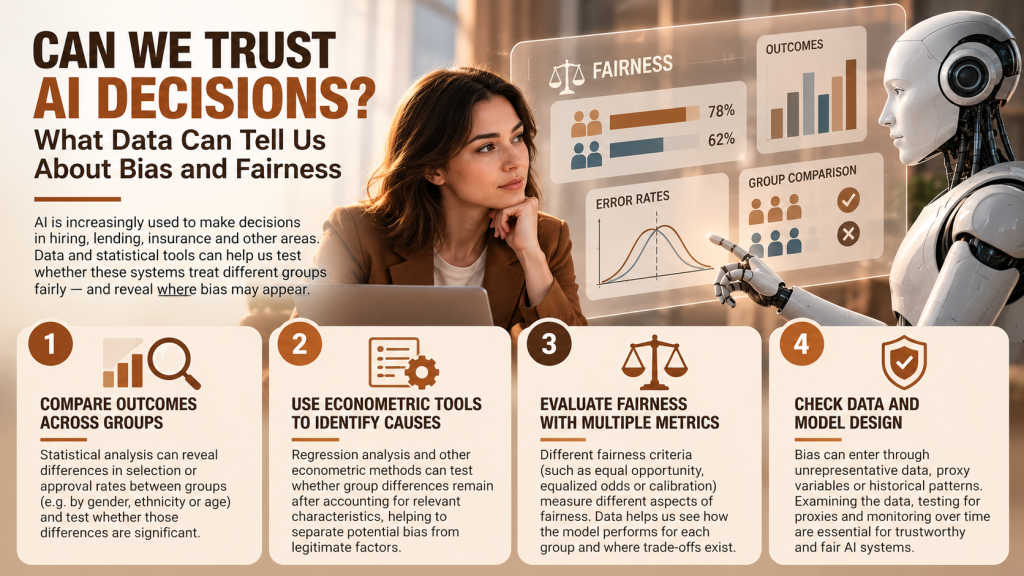
AI bias in decision making illustrated through fairness testing, statistical analysis and algorithmic decision systems

AI Bias in Decision Making: Can We Trust AI Decisions?

AI bias in decision making raises important questions about whether automated systems treat individuals and groups fairly. As artificial intelligence influences hiring, lending, healthcare, and other consequential decisions, statistical analysis and econometric methods can help identify discrimination, measure disparities, and assess whether algorithmic outcomes are reliable and fair.

AI Bias in Decision Making: Can We Trust AI Decisions? Read More »

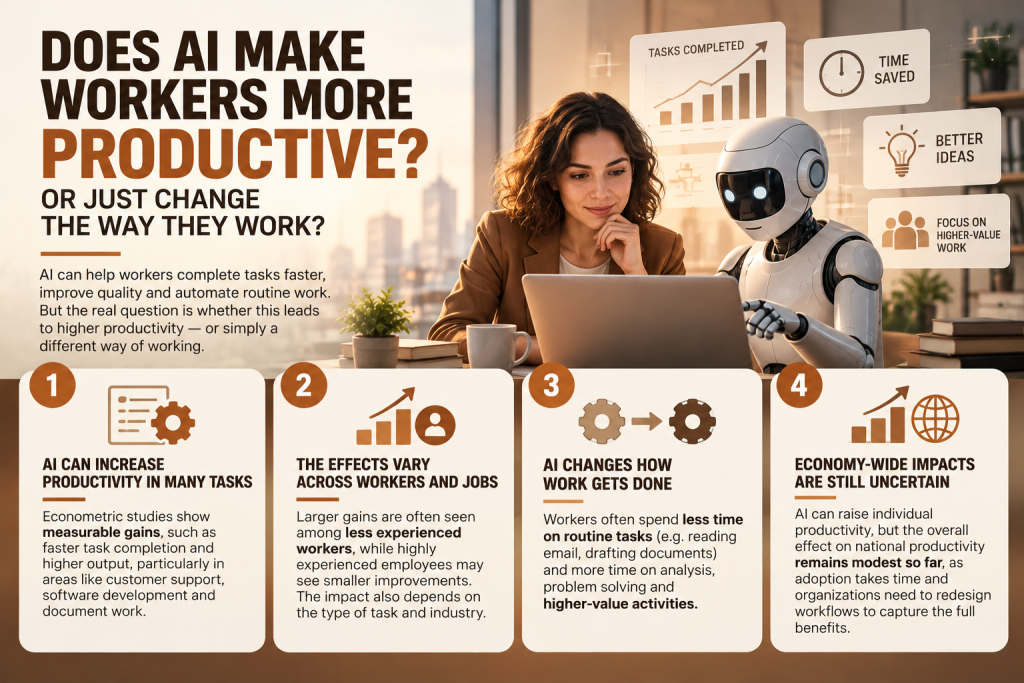
AI Worker Productivity: Does AI Improve Performance or Change How We Work?

AI Worker Productivity: Does AI Improve Performance or Change How We Work?

AI worker productivity is becoming an important subject in economic research as businesses adopt artificial intelligence across a growing range of tasks. While studies suggest that AI can improve efficiency and output in certain activities, the benefits vary by occupation, employee experience, task complexity, and workplace organization. Understanding these differences requires careful statistical analysis rather than assuming that AI improves productivity equally for everyone.

AI Worker Productivity: Does AI Improve Performance or Change How We Work? Read More »

AI text analysis economic signals extracted from news, speeches and financial reports for economic forecasting

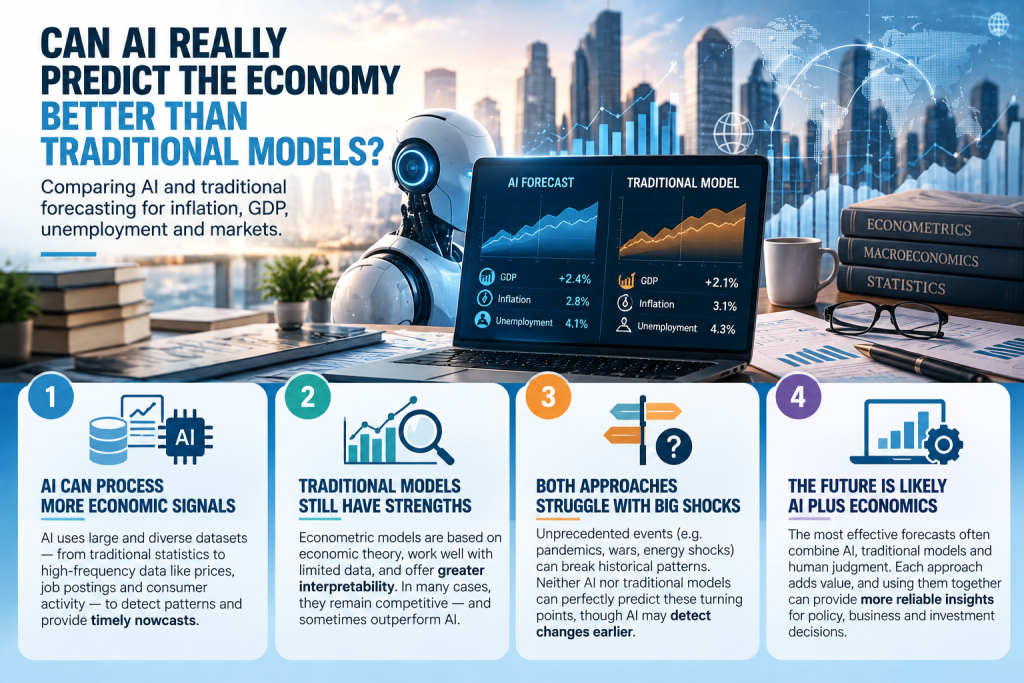
AI Economic Forecasting: Can AI Beat Traditional Models?

AI economic forecasting is changing how economists and analysts predict GDP growth, inflation, unemployment, and other economic indicators. Machine learning models can uncover complex patterns in large datasets, but their performance must be assessed against traditional econometric approaches, particularly when economic conditions change unexpectedly.

AI Economic Forecasting: Can AI Beat Traditional Models? Read More »

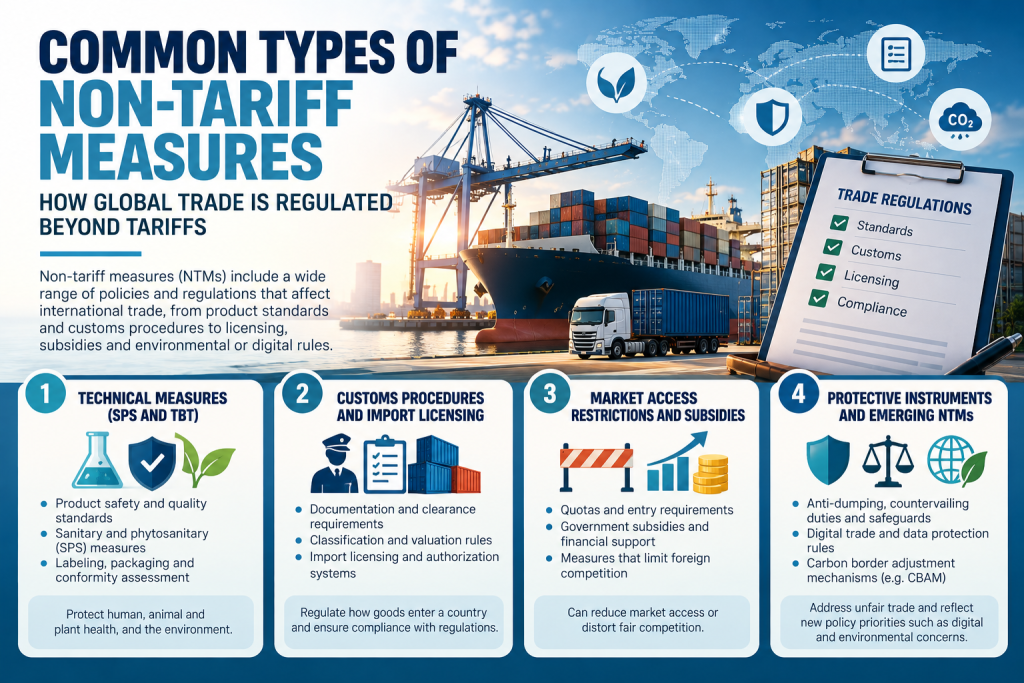
Common Types of Infographic illustrating non-tariff measures, including trade standards, import licensing and market access regulations

Common Types of Non-Tariff Measures: NTMs Explained

Common types of non-tariff measures shape how goods enter international markets, comply with domestic regulations, and compete across borders. These measures include sanitary and phytosanitary (SPS) requirements, technical standards, import licensing, subsidies, trade remedies, and emerging digital trade rules. Understanding how they operate helps exporters, importers, and investors assess compliance obligations, market access conditions, and the commercial effects of trade regulation.

Common Types of Non-Tariff Measures: NTMs Explained Read More »

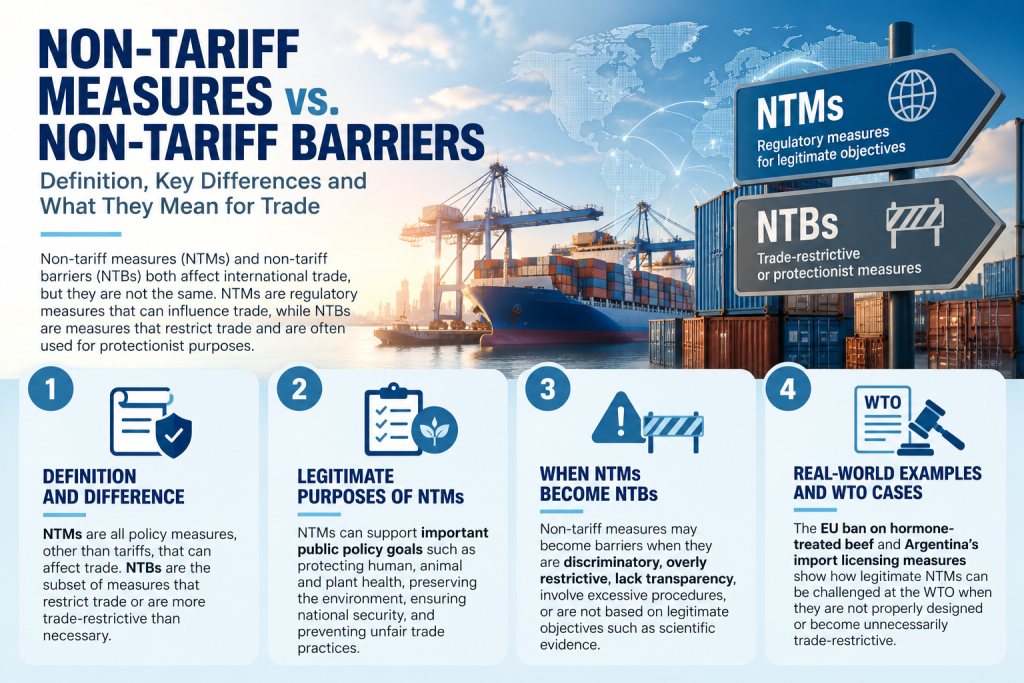
Infographic comparing non-tariff measures and non-tariff barriers in international trade

Non-Tariff Measures vs. Non-Tariff Barriers: What Is the Difference?

Non-tariff measures vs non-tariff barriers is an important distinction in international trade: not every regulation affecting imports is an unjustified restriction on market access. Non-tariff measures (NTMs) include technical standards, health and safety requirements, licensing procedures, and other rules that can serve legitimate public objectives. However, their design or implementation may also create disproportionate costs, discriminatory treatment, or unnecessary obstacles for foreign suppliers. Understanding the difference helps businesses assess trade compliance, regulatory risk, and access to international markets.

Non-Tariff Measures vs. Non-Tariff Barriers: What Is the Difference? Read More »