







Corporate Governance | Boards | Shareholders

Corporate Governance | Boards vs Shareholders

Corporate governance determines how boards are held accountable to shareholders and how corporate decisions affect long-term performance. Explore our practical case studies on shareholder rights, board effectiveness, and governance failures. Our consulting services help strengthen board accountability, align management with shareholder interests, and establish governance arrangements for sustainable business performance.

Outsider Views

Governance determines who has authority, who exercises oversight, whose interests are represented, and how accountability works when interests do not fully align.

Those questions become particularly important where ownership and control are separated. Boards, executives, controlling shareholders, minority investors, founders, institutional investors, and other stakeholders may approach the same decision from very different positions.

There is no single governance structure appropriate to every company. Ownership, jurisdiction, regulation, company size, access to capital, board composition, and the stage of a business all influence how governance works in practice.

Our Governance Views examine these relationships through actual corporate choices and evolving governance practices—considering board effectiveness, shareholder rights, incentives, conflicts, accountability, and the structures through which significant decisions are ultimately made.

Strengthen Your Corporate Governance Strategy

Interested in improving board effectiveness, shareholder relations, or corporate oversight? Explore our corporate governance books for practical insights, or discover our consulting services for support with governance structures, strategic decisions, and complex business challenges.

Our Background

Professional Experience and Education

Corporate Governance | Boards | Shareholders

Corporate Governance Insights

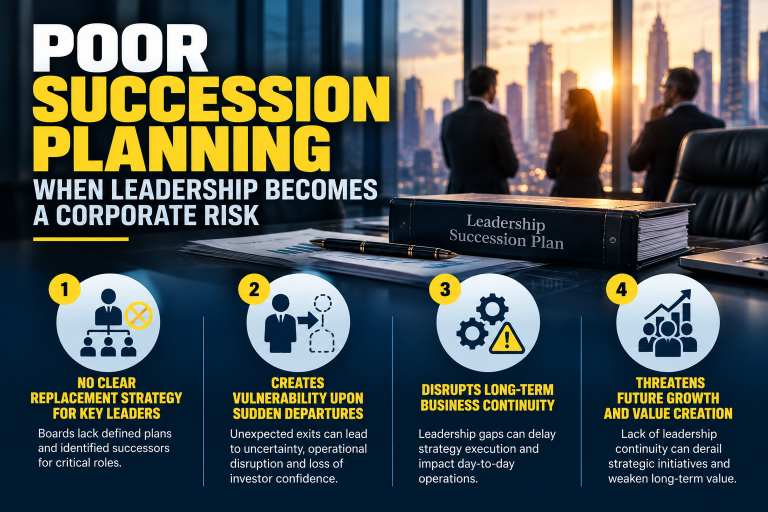
Corporate Succession Planning: When Leadership Becomes a Risk

Leadership transitions are inevitable, but leadership crises are not. Poor succession planning leaves companies vulnerable when CEOs or other critical executives depart unexpectedly, potentially...

Explore More Insights from Outsider Advisory

Corporate Succession Planning: When Leadership Becomes a Risk

Leadership transitions are inevitable, but leadership crises are not. Poor succession planning leaves companies vulnerable when CEOs or other critical executives depart unexpectedly, potentially...

Corporate Transparency and Disclosure: When Reporting Hides Risks

Corporate transparency and disclosure are essential for helping shareholders, investors, and other stakeholders understand a company's financial position, governance practices, and exposure to risk...

Board Risk Oversight: When Directors Ignore Warning Signs

Board risk oversight is a fundamental responsibility of corporate directors, helping companies identify, assess, and respond to financial, operational, cybersecurity, and strategic threats. When...

Misaligned Executive Compensation: When Pay Rewards the Wrong Results

Misaligned executive compensation can create serious corporate governance problems when CEO pay rewards short-term financial results rather than sustainable business performance. Poorly designed...

Board Independence: Why Corporate Oversight Fails

Board independence is essential for effective corporate governance because directors must be able to challenge executives, question strategic decisions, and protect shareholder interests. When boards...