
Transfer Pricing Compliance | Regulatory Developments

Explore transfer pricing compliance, international tax regulations, and regulatory developments affecting multinational businesses and cross-border transactions. Our analysis examines the arm’s length principle, related-party pricing, transfer pricing documentation, OECD guidance, and the practical implications of changing tax rules. Discover further research and perspectives in our articles and insights library.

Our business consulting services support companies and professionals with economic analysis, pricing policy assessment, financial modeling, and the evaluation of cross-border business arrangements. We connect regulatory considerations with commercial and financial analysis to help organizations assess risks and make informed decisions.

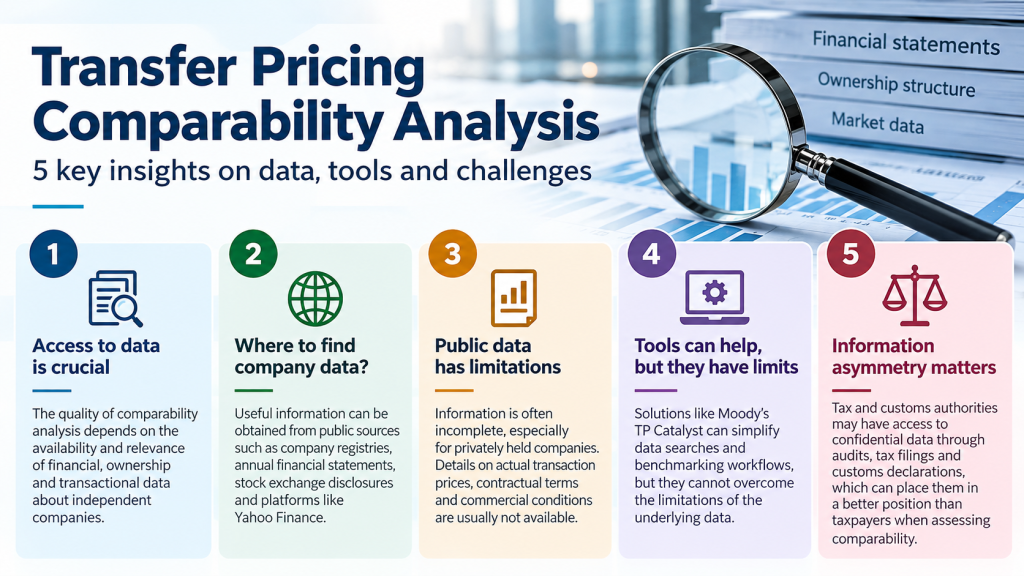
Transfer Pricing Comparability Analysis, where to find reliable financial data, the limitations of benchmarking tools

Transfer Pricing Comparability Analysis: Why Access to Data Matters More Than the Tools

Transfer Pricing Comparability Analysis depends on access to reliable financial, ownership and transactional data. Discover where to find comparable company information, why tools such as Moody’s TP Catalyst have limitations, and how restricted access to confidential data can affect tax disputes and the fairness of transfer pricing assessments.

Transfer Pricing Comparability Analysis: Why Access to Data Matters More Than the Tools Read More »

Transfer Pricing Risks

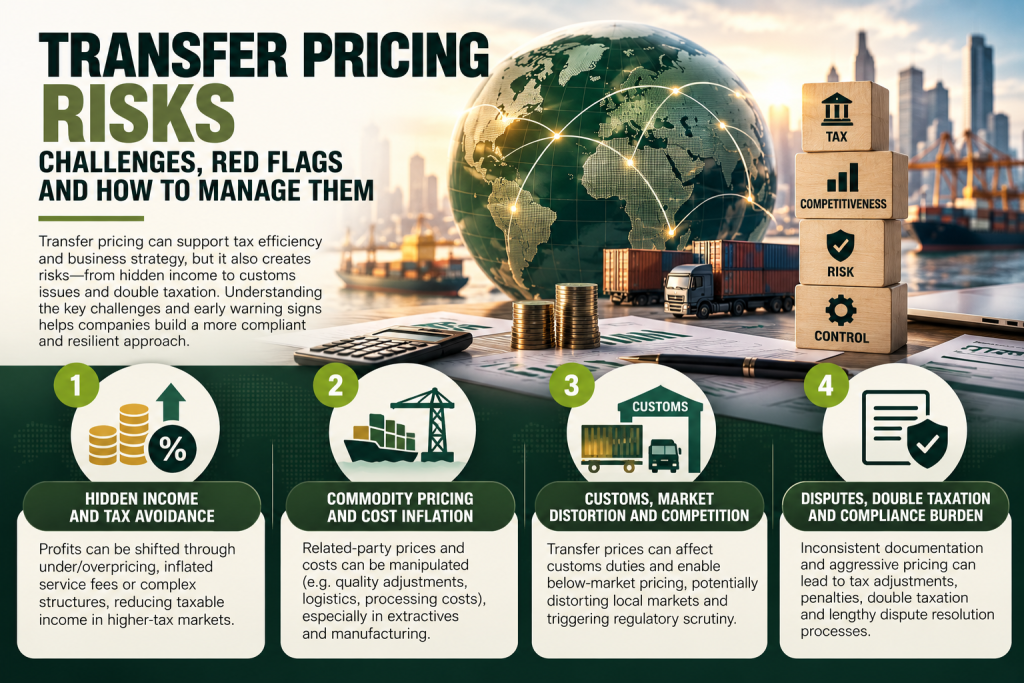
Transfer Pricing Risks: When Intercompany Pricing Becomes a Governance Problem

Transfer pricing risks arise when the prices and terms applied to transactions between related companies are not adequately supported, documented, or governed. Although transfer pricing is often treated primarily as a tax compliance issue, weaknesses in intercompany pricing can also expose broader problems in corporate oversight, financial reporting, accountability, and risk management.
This article examines how intercompany pricing decisions can become governance challenges, particularly when commercial objectives, tax considerations, and internal controls are poorly aligned. It explores the importance of the arm’s length principle, defensible documentation, clear decision-making responsibilities, and effective oversight in managing related-party transactions.

Transfer Pricing Risks: When Intercompany Pricing Becomes a Governance Problem Read More »

Transfer Pricing Strategy

Transfer Pricing Strategy: Profit Allocation, Competitiveness, and Risk Management

Transfer pricing strategy influences how multinational companies allocate profits, manage tax exposure, and coordinate commercial activities across jurisdictions. The prices applied to transactions between related entities affect not only tax compliance but also subsidiary performance, internal incentives, and the competitiveness of international business operations.

An effective approach balances the arm’s length principle with commercial realities, defensible documentation, and appropriate risk management. This article examines how multinational groups can structure intercompany pricing policies, evaluate profit allocation decisions, and manage the trade-offs between tax compliance, operational efficiency, and long-term business strategy.

Transfer Pricing Strategy: Profit Allocation, Competitiveness, and Risk Management Read More »

EU public country-by-country reporting and corporate tax transparency illustration

EU Public Country-by-Country Reporting: Rules and Requirements

EU Public Country-by-Country Reporting brings multinational tax information into the public domain. Large EU and non-EU groups with significant EU operations may need to disclose revenue, profit, tax, employees and activities by jurisdiction using a standardized, machine-readable reporting format.

EU Public Country-by-Country Reporting: Rules and Requirements Read More »

Transfer Pricing Disputes

ExxonMobil Transfer Pricing Case: Cost Sharing Lessons

The ExxonMobil transfer pricing case illustrates how intercompany cost-sharing arrangements can become the subject of significant tax disputes. Beyond the terms of an agreement, tax authorities and courts may examine the commercial rationale for the arrangement, the allocation of expected benefits, and the economic substance of transactions between related entities.

This article examines the ExxonMobil transfer pricing case and its implications for multinational groups managing cross-border cost-sharing arrangements. It explores the importance of defensible intercompany agreements, supporting documentation, and consistent treatment of costs and benefits, while drawing practical lessons for transfer pricing governance and tax risk management.

ExxonMobil Transfer Pricing Case: Cost Sharing Lessons Read More »